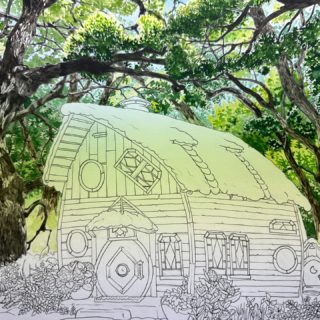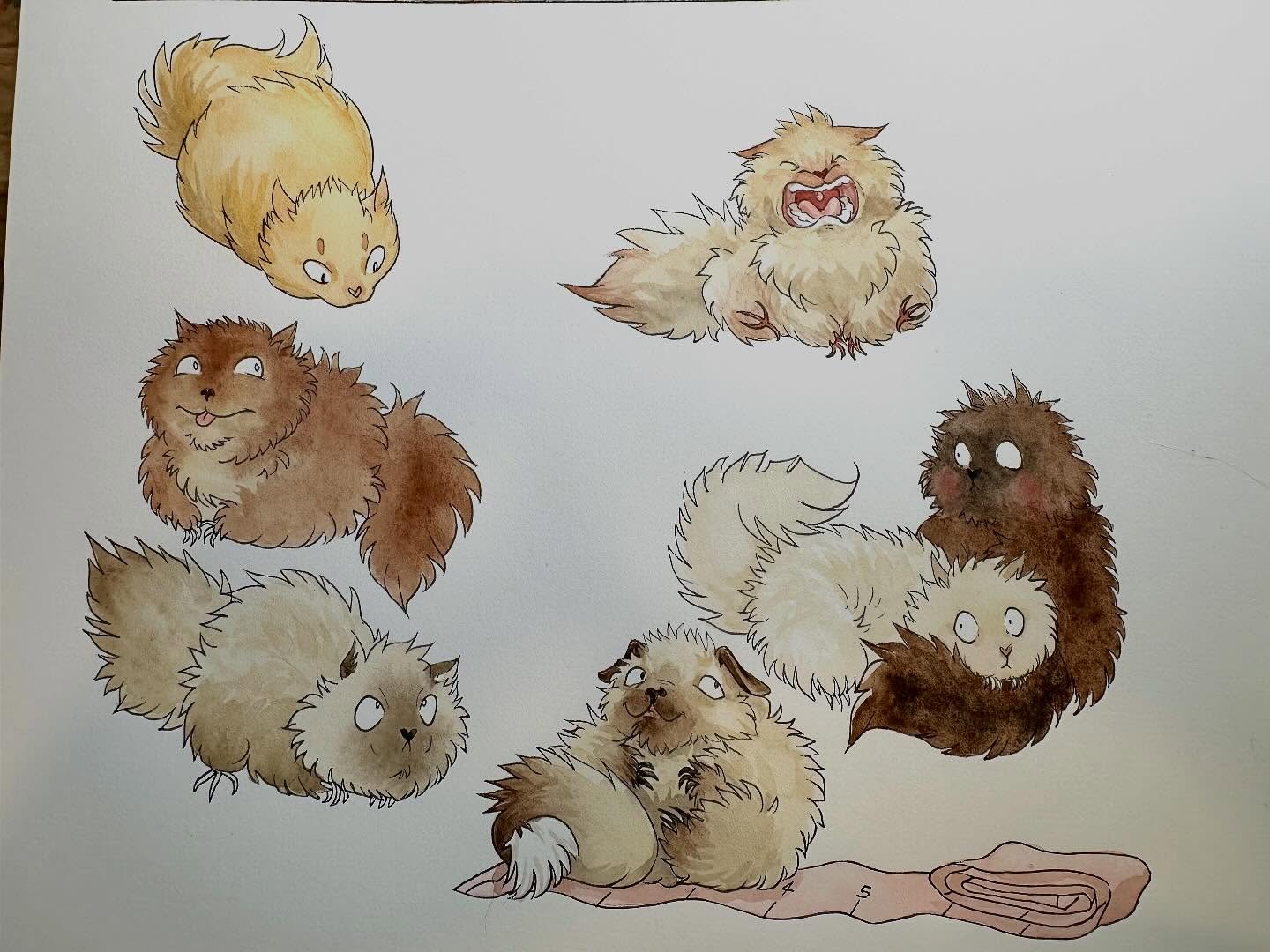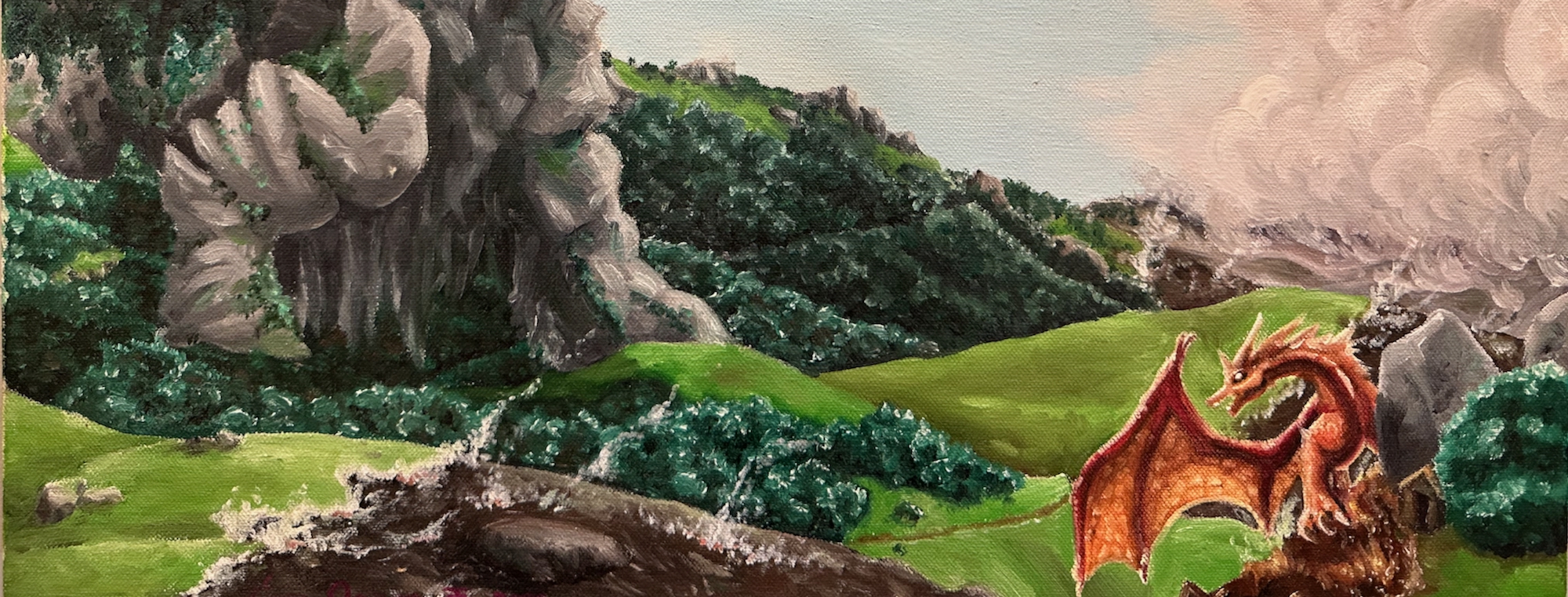
From sky to sky the dragons flew, beyond the reach of human minds. From sky to sea they fell, and sank, and slept. But out of Yttraiar they rose, still sleeping. Under Raruna they dreamed. And in the dreams of dragons, what mighty worlds may grow? What heroes may be born? What legends may thrive? This is Kiarigyring, the dance of life and death. When the dragons wake all shall be lost, but in their dreams we live, we die, we dance. We dance until the land rises and shakes us back into the endless ocean, and the dragons resume their flight into the untouchable sky.
Urvian Salutation
An Original Mythology
I can only write the stories I can write now. The stories I am writing now I could not have written when I was 14. But just as then I could not possibly have written what I am writing now, no more can I now write what I wrote then. Which is why I am glad I did write those enthusiastic, awkward, often misspelled stories fueled by imagination raw and untempered. The experiences of my life have given my work depth and perspective and detail, but looking back on what I created when everything was new and original helps to center me on who the me is that’s writing these tales.
The Urviianiy is the evolution of one such early story.
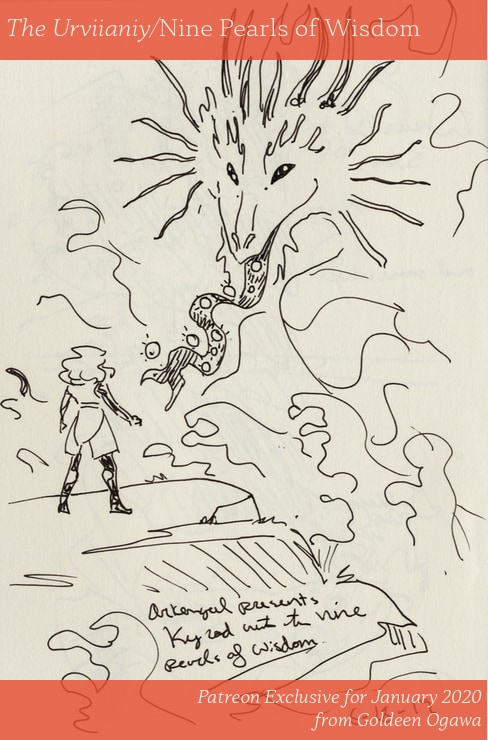
For the past five years I’ve been sending out short stories to members of my Patrons/Community Supported Artistry (CSA). To date all these stories have been part of the same series: the legends of Urvia, or The Urviianiy. I started with the story above in January of 2020 (pre-COVID!) and I’ve been writing them in between larger projects ever since. But the beginnings of Urvia date back much farther than 2020. Before the beginning of Driving Arcana, Professor Odd, Bouragner Felpz, before even Lucena in the House of Madgrin, I wrote a story about a boy who came to a country of five islands. These islands had a secret too incredible for him to believe until he saw it with his own eyes. That secret was dragons.
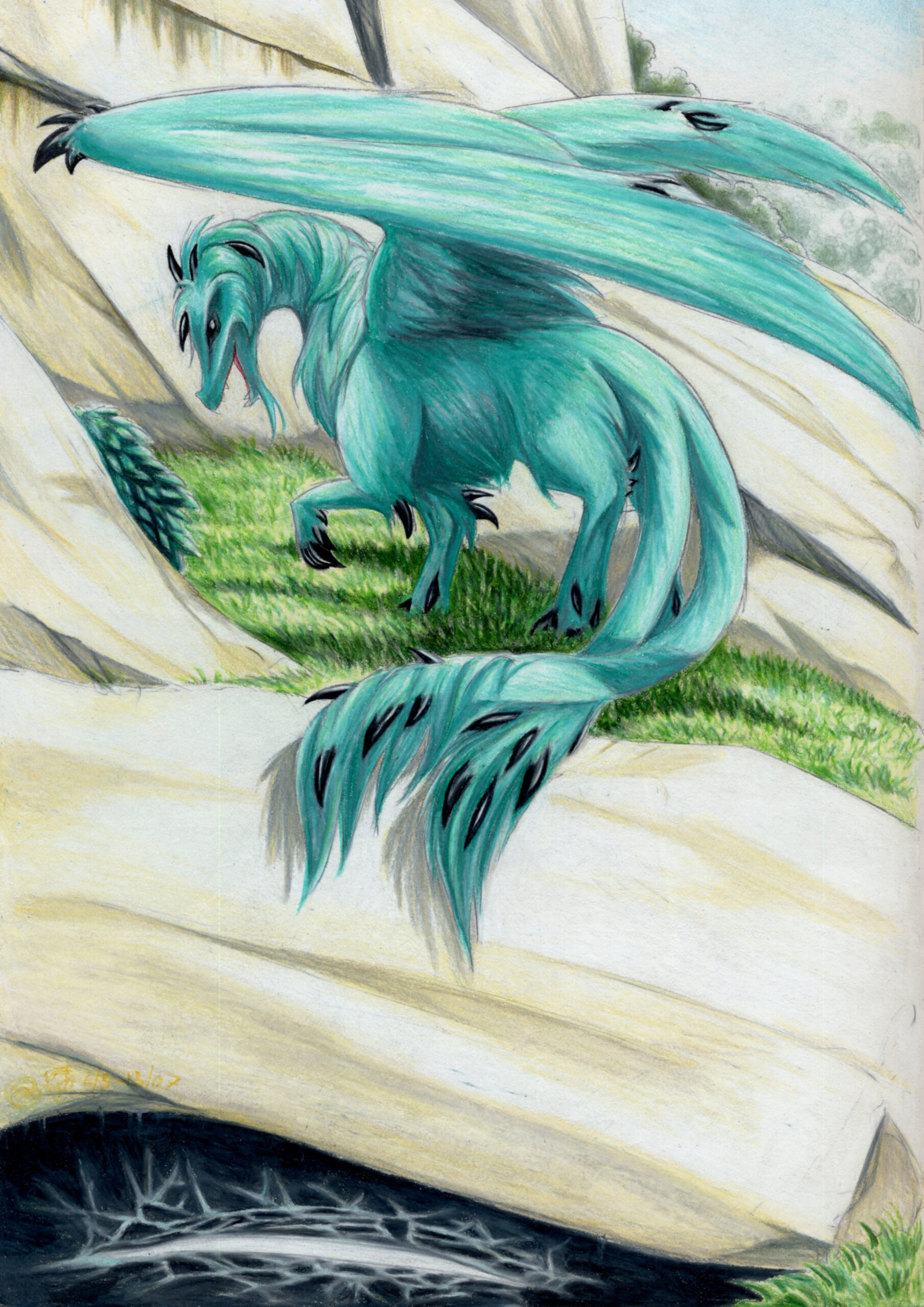
Like any self-respecting nine year old I was entranced by dinosaurs and dragons were a logical extension of that interest. I’d loved the dragons in Patricia C. Wrede’s Enchanted Forest series and Deucalion from Darklord of Derkholm, but something happened in my brain when I read The Merlin Conspiracy (those looking for the inevitable connection between my work and Diana Wynne Jones have just found it). When the White Dragon woke up at the end it moved me emotionally beyond the bounds of the book.
I grew up in rural California in the foothills of the Sierra Nevada mountains, just south of Sequoia National Park. There were hills and mountains that struck me as being particularly potent, as if hiding something momentous. From reading The Merlin Conspiracy I finally realized what it was, and it was the secret to Urvia.
The dragons were not asleep under the mountains. The dragons were the mountains.
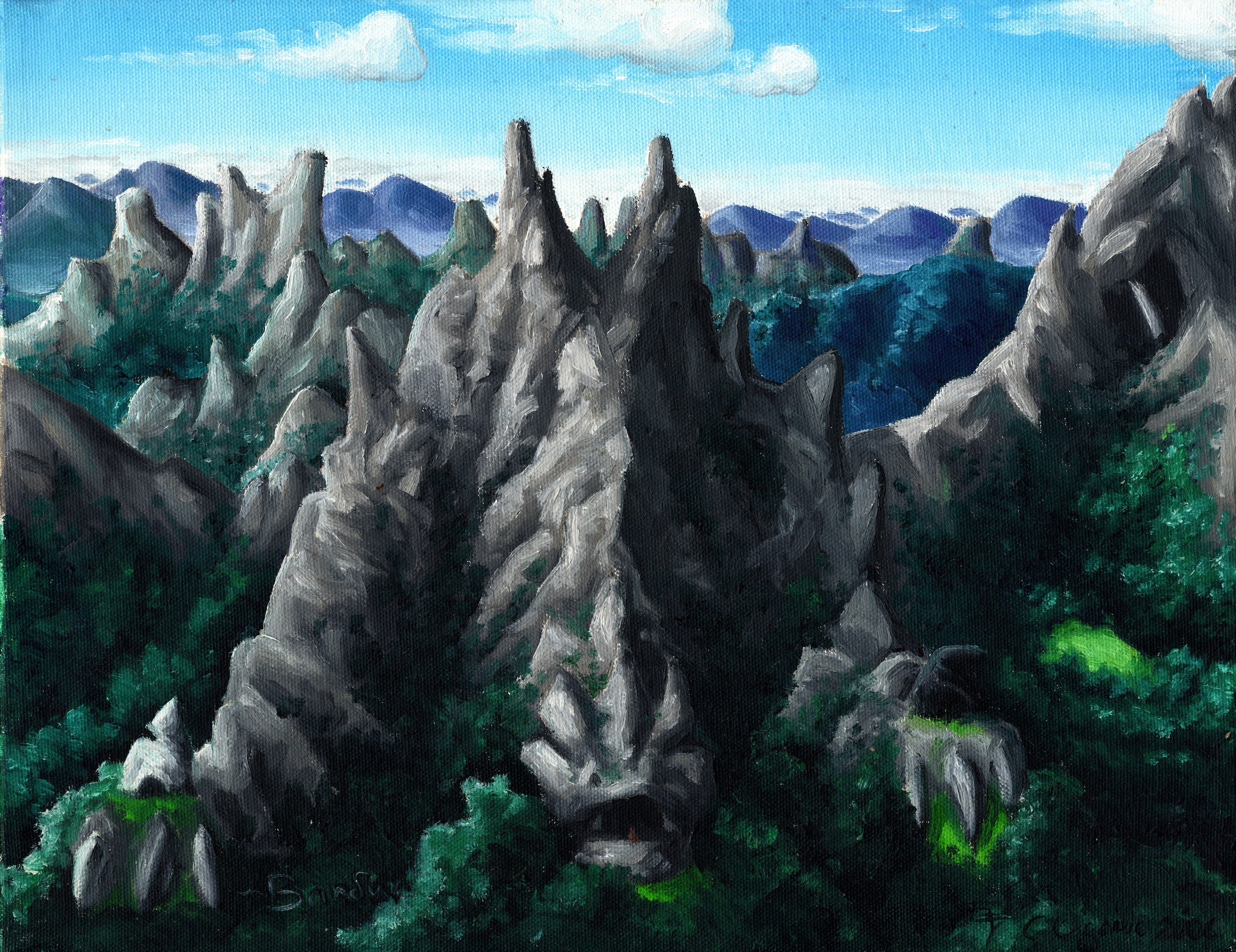
Upon realizing that some mountains were dragons it followed that there could be whole islands that were dragons. Giant, enormous Earth Dragons that slept so deeply trees and grass and deer and people began living on them. But what would happen when they woke up? What calamity would that be, and what momentous events would precipitate it?
Diana Wynne Jones had already found her answer to those questions, and it’s in The Merlin Conspiracy. But my dragons are not her dragons and I would have to find my own answers.
So began my exploration of Urvia. I didn’t call it that in the beginning. I called it “Uria” pronounced Rrrr-ee-ah, but my Wonderful Mother pointed out that this word looked like something very very different and probably not what I wanted the place associated with. I held firm. I was creating an original fantasy world where this association did not exist. I was 14 after all, I knew best.
I wrote my novel about the boy on the islands that were dragons. I set it aside and wrote many (many) more novels, during which time I came to understand that one can write original fantasy but ultimately it will be read by people in the real world and so one does have to account for the reasonable associations and assumptions they will make. I found I could not use the name Uria after all, yet try as I might I could not find a name to replace it, and so the setting settled into the sediment of storymatter that lies at the bottom of my mind. But the place remained as profound and immovable as the sleeping dragons themselves. It became more than just the dragons. It was the people (not always human) who lived on them. It was their world, their culture, their mythology. An original mythology, not dependent on any of the myths I had grown up reading. And as I grew up and got better at writing and bridging the gap between my imagination and reality, like a patient perennial establishing a root system, eventually I had acquired enough strength and skill that the stories started to bloom.
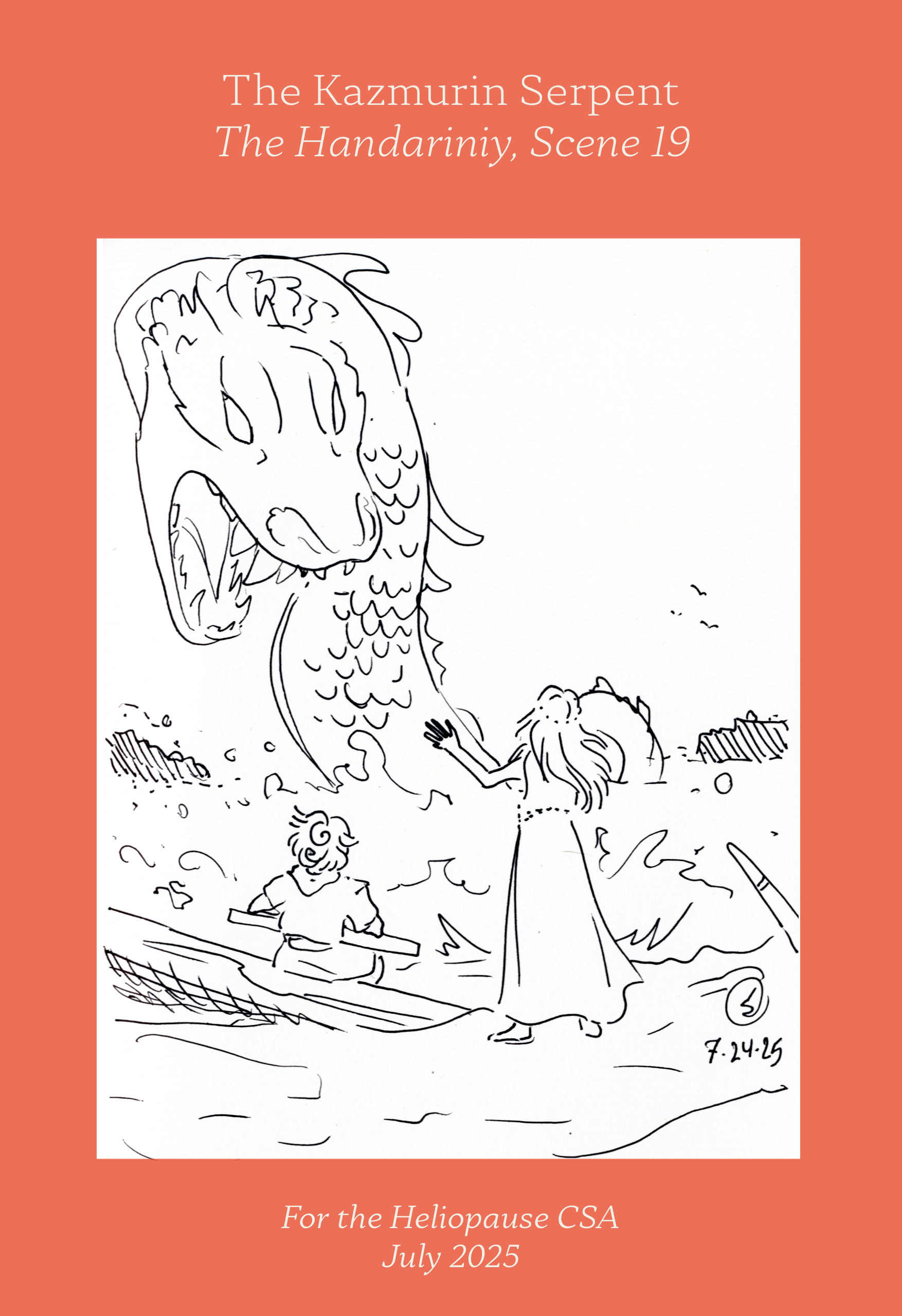
The Urviianiy is an original mythology, but some of its myths are direct refutations of archetypes one finds throughout our world. I read one too many myths where a young woman was sacrificed or otherwise horrendously mistreated by her parents, her hero, and the storyteller. I wrote a reactionary tale explaining why this trope simply doesn’t exist in the Urvian mythos. I didn’t know it was called Urvia until I wrote the story, but writing it forced me to figure out the place’s name once and for all. Once I found the name Urvia (pronounced RR-vee-ah) it was like a curtain lifted and a whole new world spread out before me.
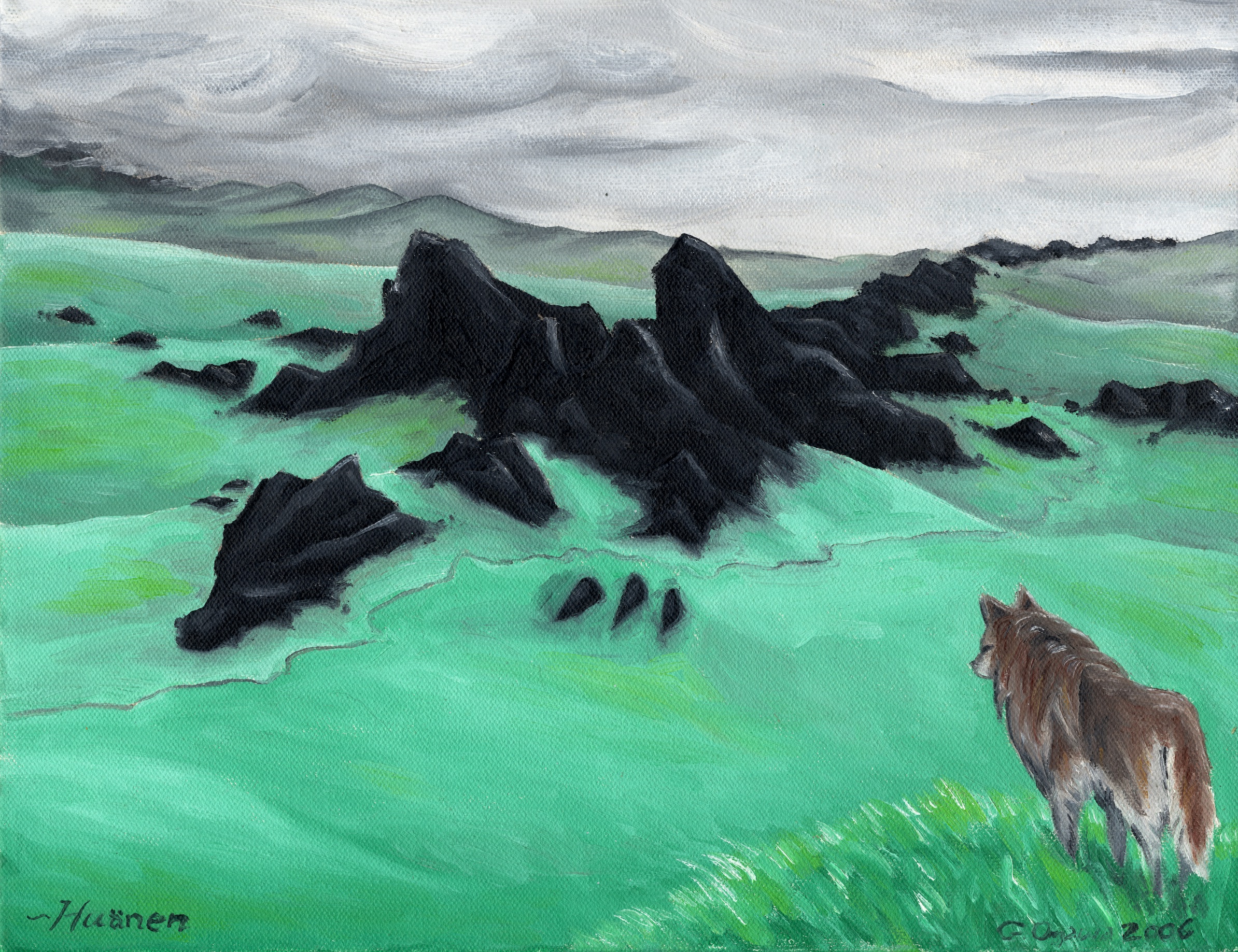
Around the same time COVID-19 hit, and I suddenly had a lot more time to sit in the quiet and dark of the morning and write, write, write.
To write the stories I couldn’t write when I was 14, 18, or even 25. To write the stories I can write now.
Urvia became a place for me to explore mythology as a way of illustrating society. Specifically a society that is unlike anything I have encountered in our local world or its history. While I have used preexisting cultures as templates for some of the other countries in my fantastic fiction (England for Kyreland, Japan for Keikan, France for Fortau), Uriva is different. Urvia is not based on any one historical culture or mythology. Rather it is a new imagining of what a culture could be, given that it evolved in the quasi-reality of dreaming, continent-sized dragons—and moreover, one that subverts a lot of the harmful prejudices endemic in ours.
Writing Urvia is me having fun re-imagining archetypal stories about creation, life, death, reincarnation, love, loss, justice and revenge. It’s also me pouring all my power and skill into crafting a world so detailed and credible one could imagine living in it—and living well. It is my escape and my refuge when the trials of our own world become too great, but also a means of exploring different ways of doing things that we could perhaps use to make our world better for everyone.
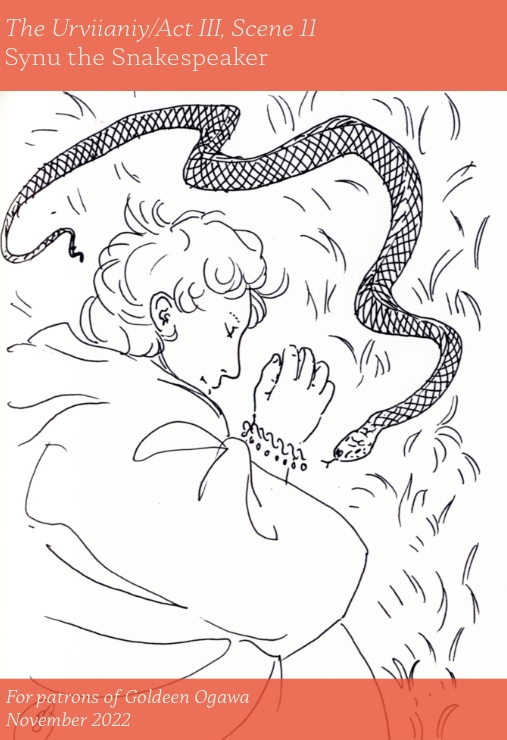
You may read it here, or listen here.
The Urviianiy is, in a sneaky sort of way, about us as we exist in this world, projected into a fantasy where there is magic and talking bears and people who turn into griffins. Across this spectrum of stories there are a few tenets that identify whether a story is Urvian.
- It is emotionally just. I use the phrase “emotional justice” here to mean that the reader feels satisfied at the conclusion of the story and that fair and/or poetic justice has been brought.
- It’s surprising, a bit cheeky and slightly absurd. As if to counteract the literal weight of the dragons that anchor its mythology, Urvian legends never take themselves too seriously. If a legend is a puzzle, then the solution should be surprising, funny, and absolutely correct.
- It is to our contemporary eyes incredibly queer. Let me emphasis that: to our eyes. Transgenderism, homosexuality, genderfluidity, intersex beings, even polyamory, are not queer to Urvians. They are established aspects of ancient Urvian society. It’s patriarchy and gender essentialism that are weird to them.
- Magic is a real and irrefutable force and these people have a near-contemporary understanding of post-enlightenment scientific principles.
- The story preserves within its structure some person, place, or thing that is precious to me.
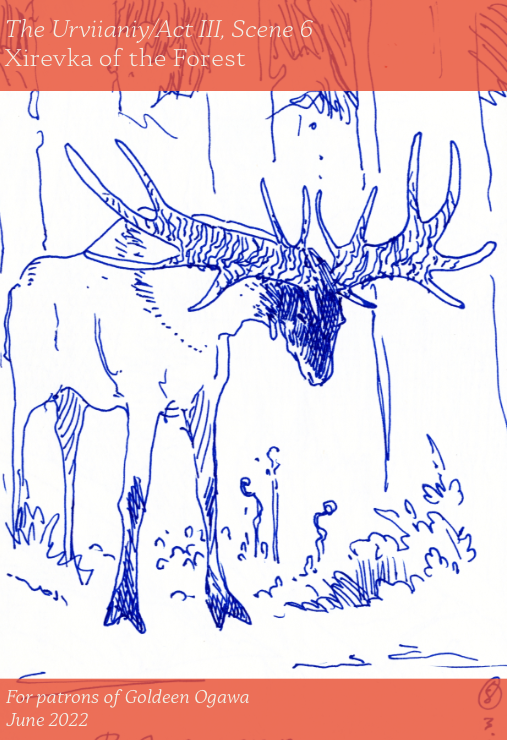
In writing the Urviianiy I’ve pulled on my happiest memories and the most beloved experiences of my life—and of events in the real world. These moments are all too fleeting much of the time, so by putting them into legends—if only legends of my own creations—I try to give them a place to live on. When you read the Urviianiy you’re not just reading a collection of original myths, you’re reading a literary preserve of the real-world animals, places and incidents that I feel are worth immortalizing. In these fantasies I am celebrating the real wild wonder of our shared world, from mushrooms to comets, monitor lizards, river dynamics, welding, dog-sledding, and kindness.
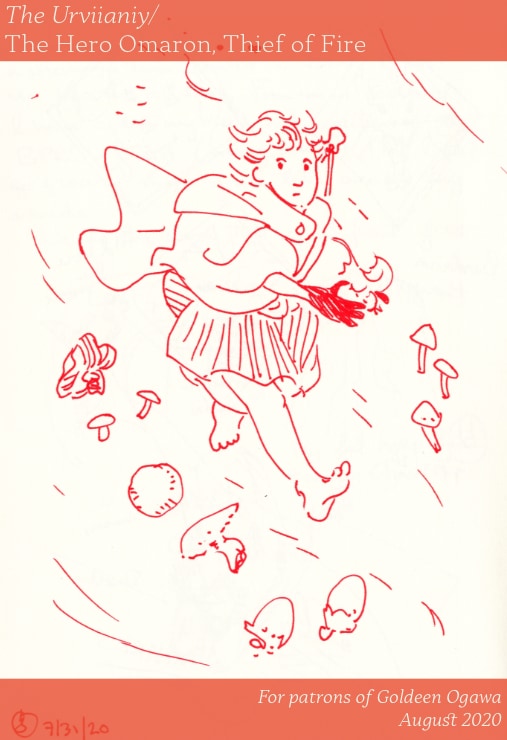
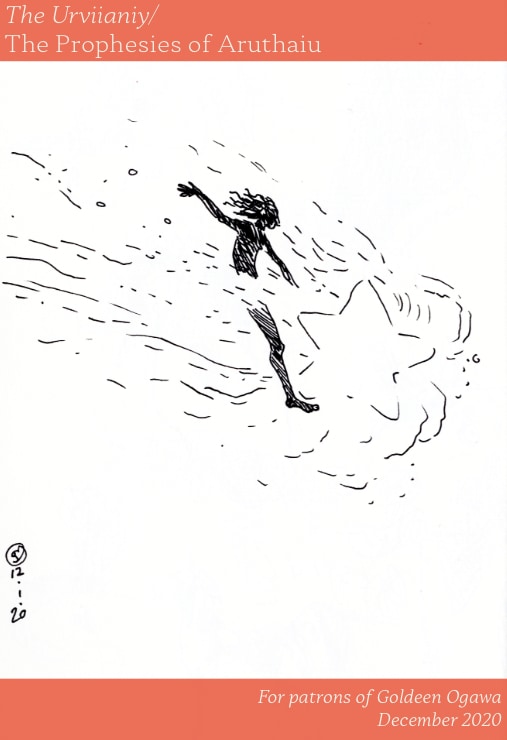
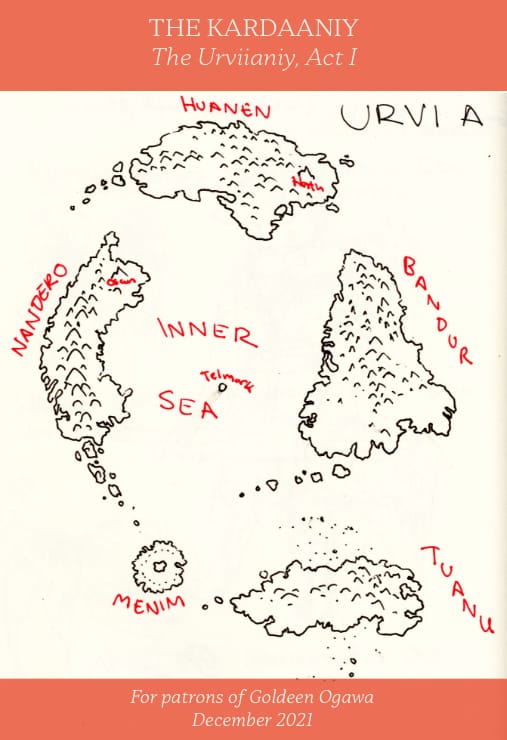
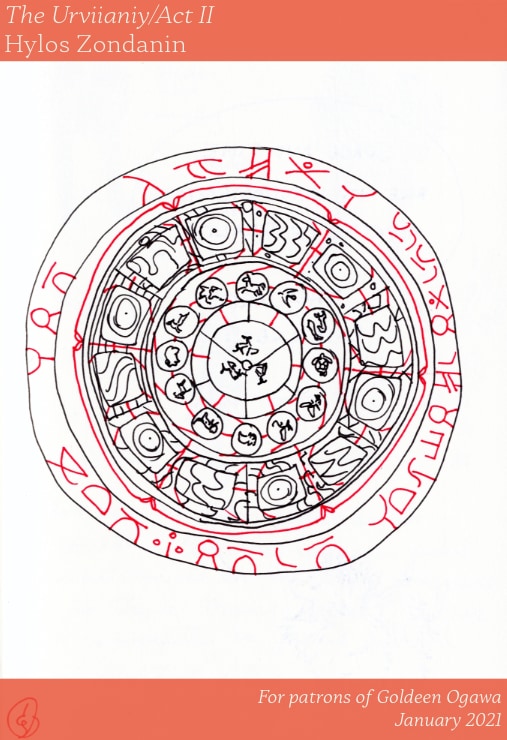
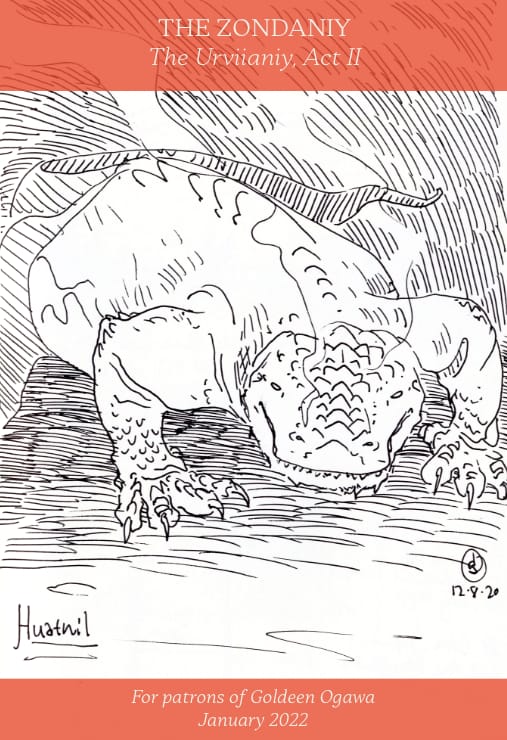
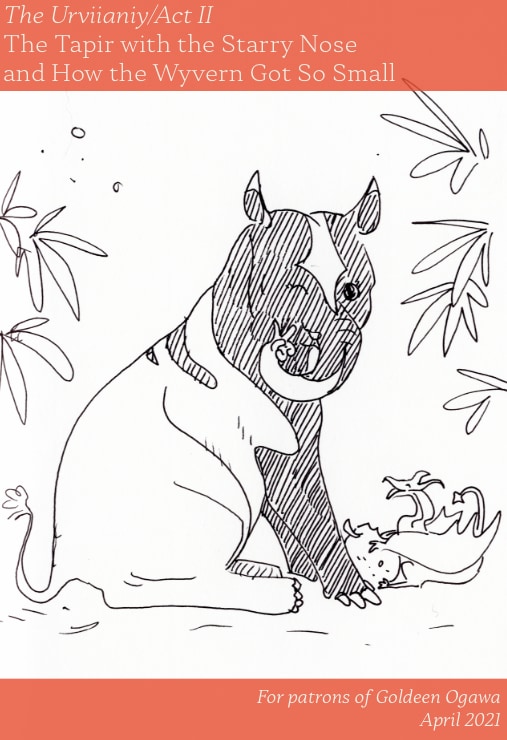
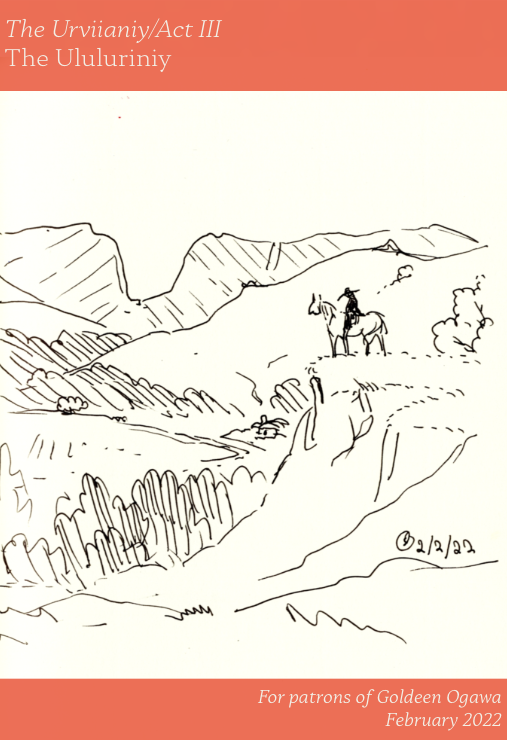
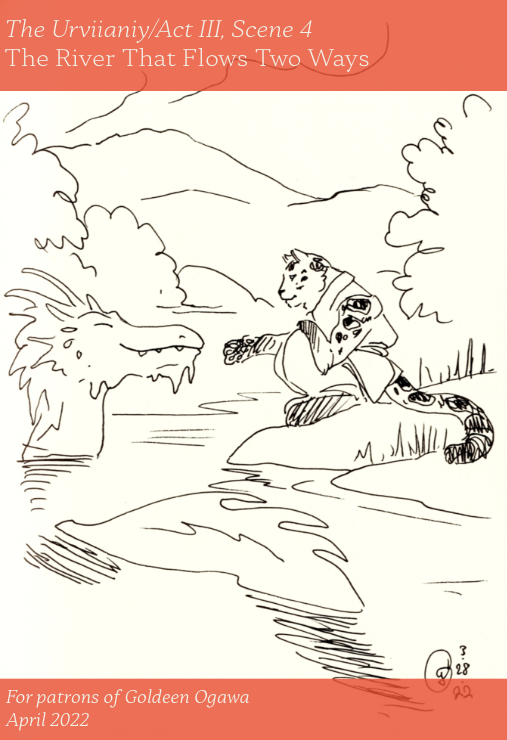
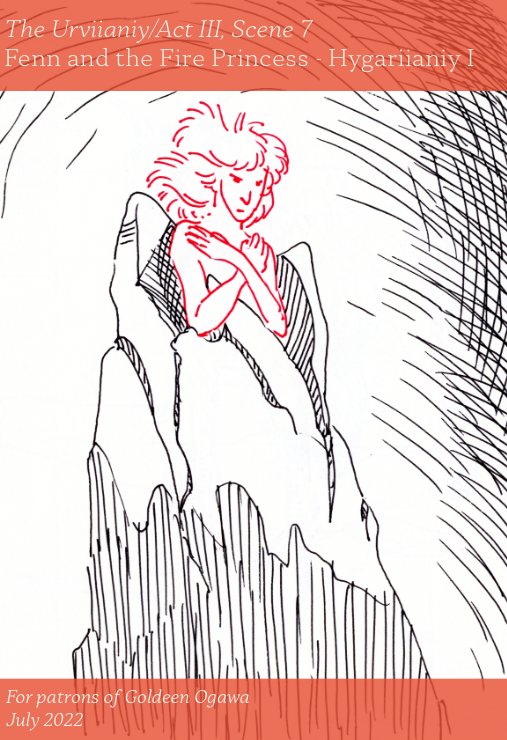
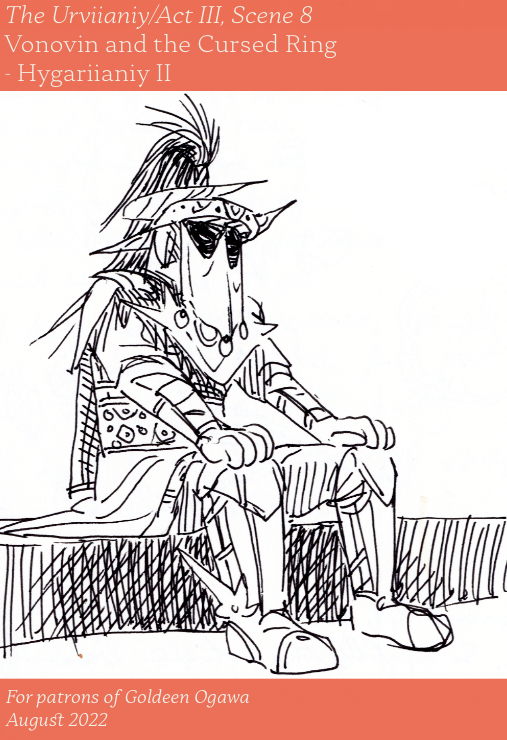
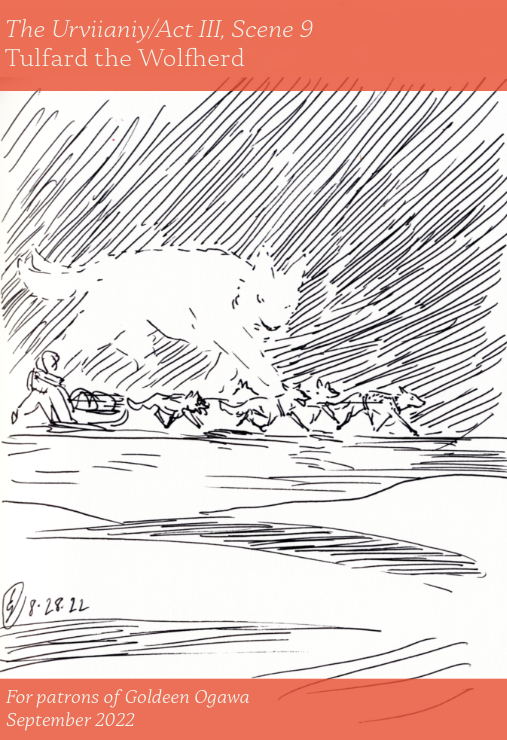
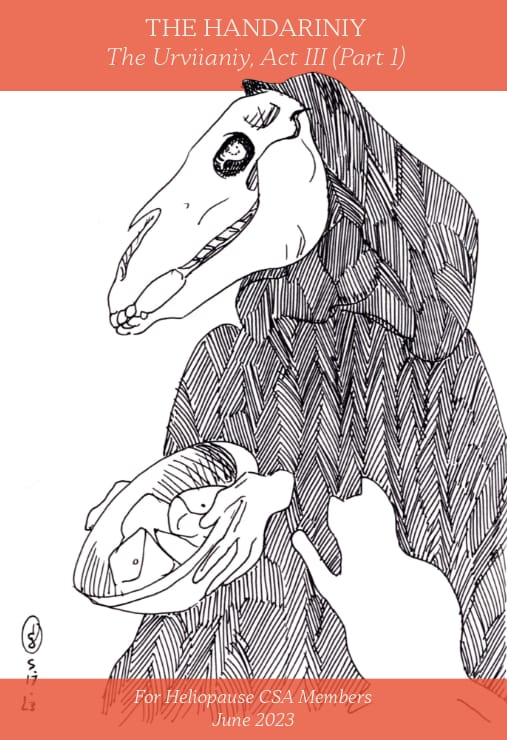
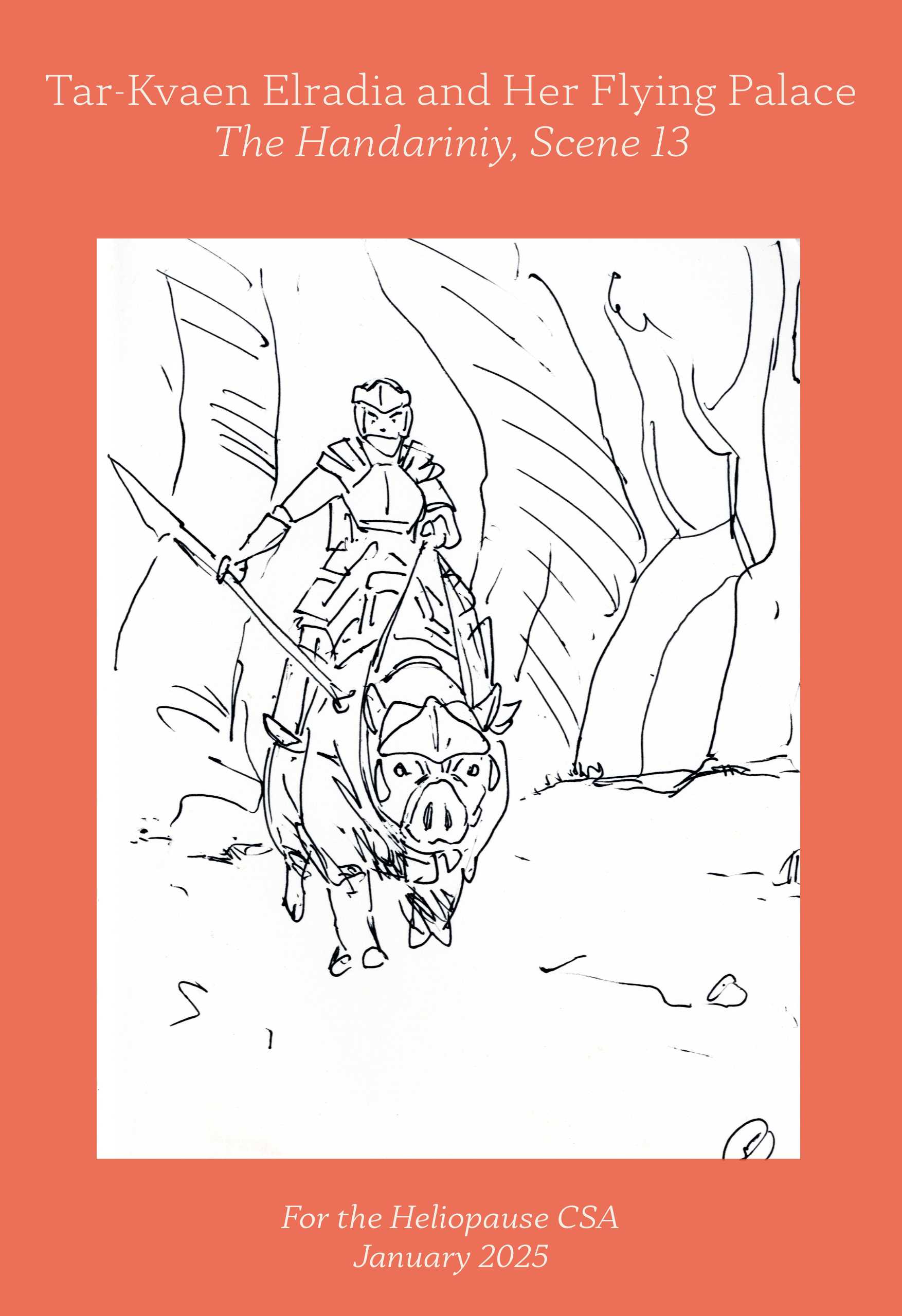
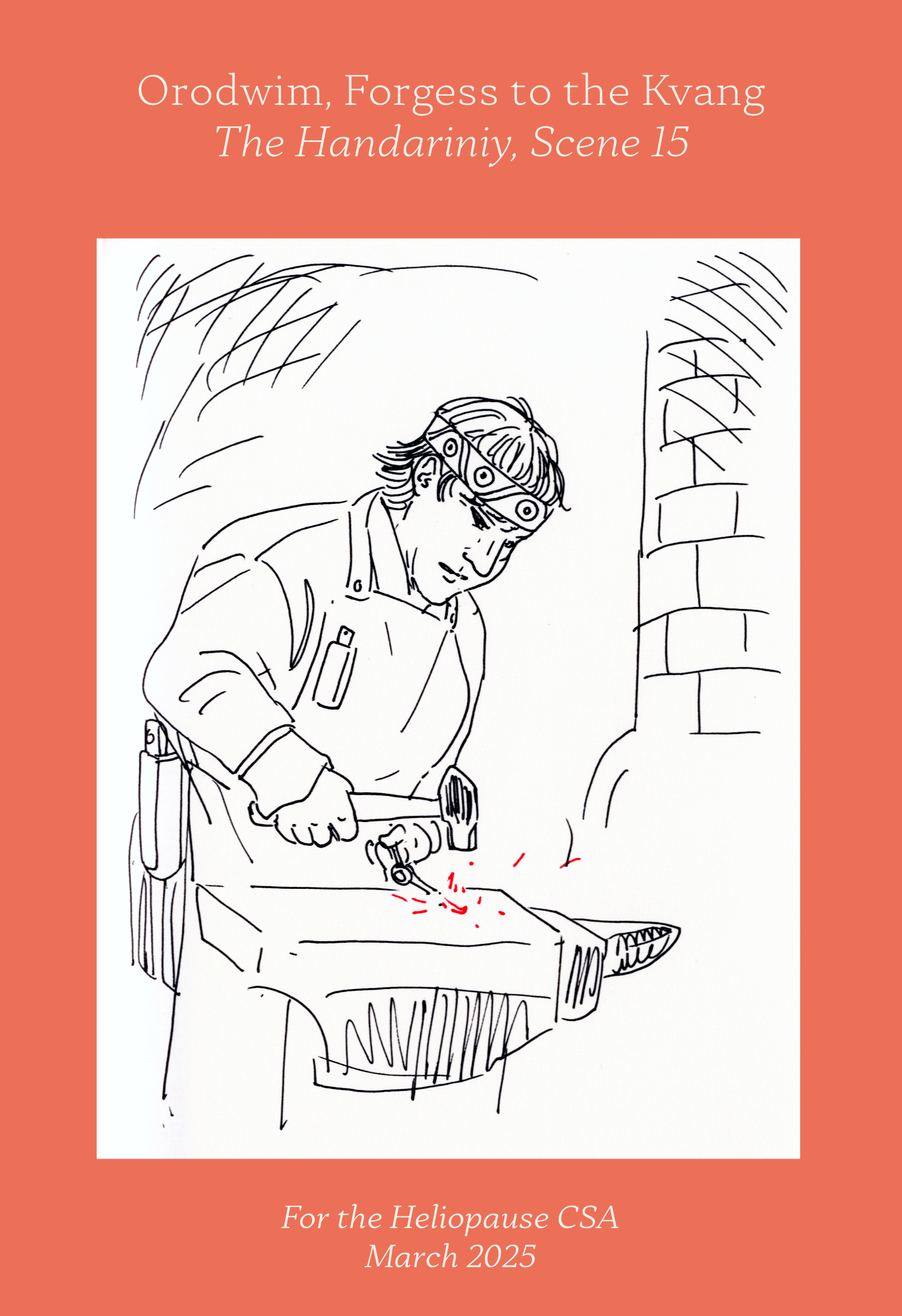
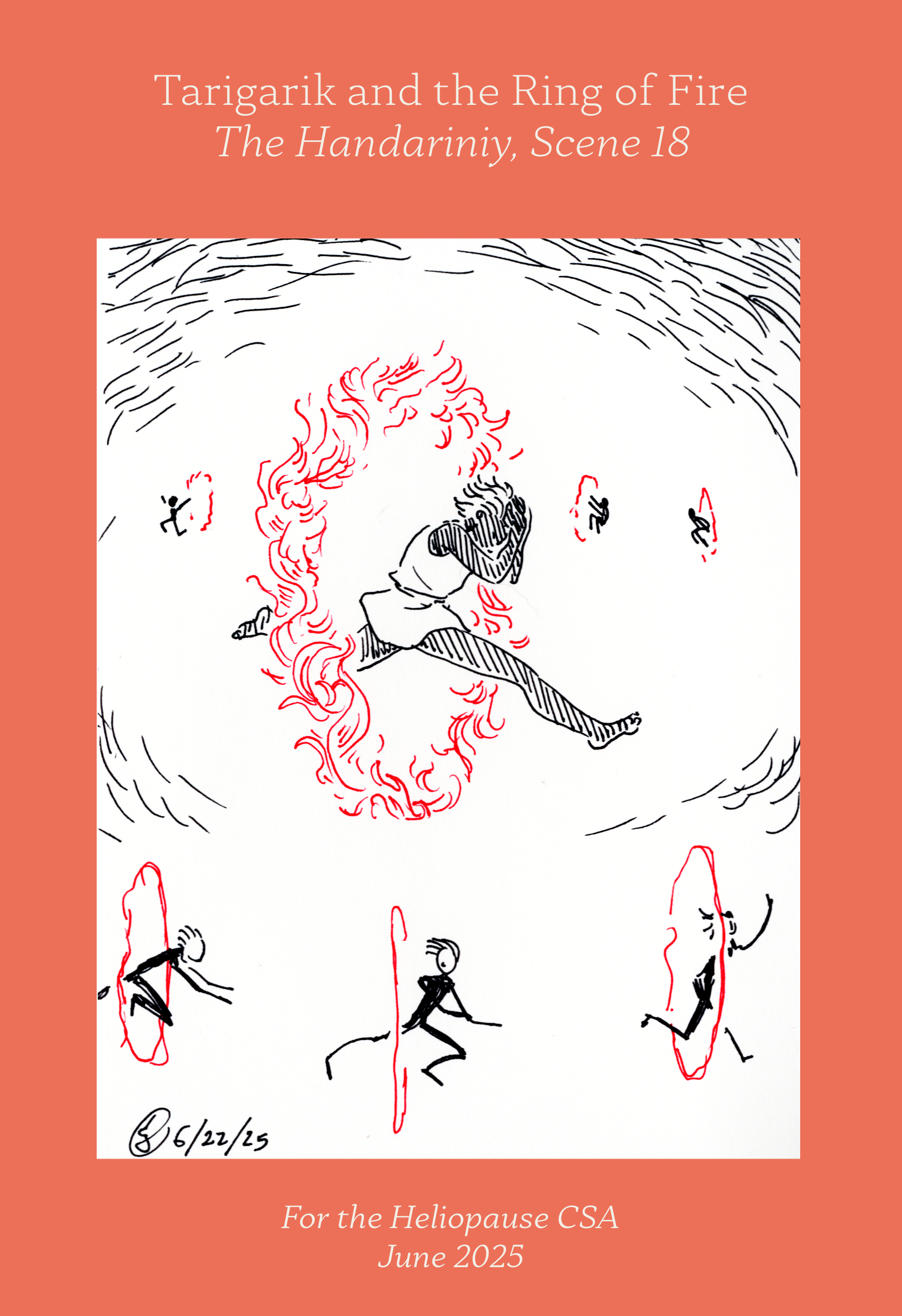
The Urviianiy is still in progress, but it will eventually be a comprehensive collection of the essential myths from ancient Urvia, as compiled by that boy from the original story (now grown into quite an extraordinary scholar). It will be at least three volumes, maybe more. Urvia keeps unfolding before me, blooming like a peony with more and more crinkly petals unfolding from the center and each one hosting echelons of stories. Already there is more to Urvia than “just” The Urviianiy. Urvia, that country unbound by restrictions of our local universe, is the host of another story that readers may already have heard of.
Yes, Urvia is the matrix that holds the gem of Valdelluna.
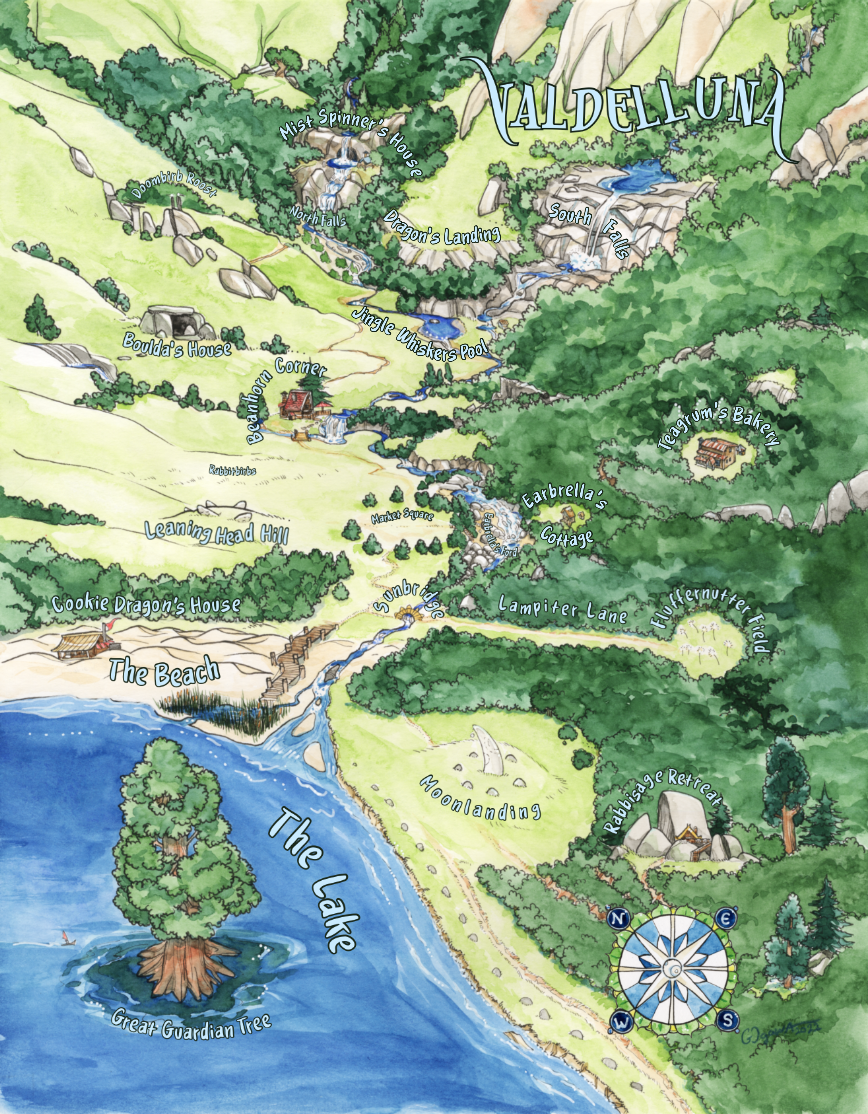
But that’s a post for another month.
Meanwhile, if you like the look of these stories and don’t want to wait for however long it takes me to publish them, do join the CSA! You’ll get new stories as they are released (about once a month), and if you join by August 31st I’ll send you the entire collection to-date. (I had meant to run this promo in June/July but I’d also intended to get this post out much earlier, and good intentions pave the way, etc. etc.) If you’re only finding this post after August 31 2025, just buy a one-off Antellonian membership and mention that you’d like the Urviianiy collection. To purchase a membership or read more about the program, click here. You may also join via Ko-Fi or Patreon, if you like.
Be well.
G